Join the movement to end censorship by Big Tech. StopBitBurning.com needs donations and support.
Study: Short afternoon nap may reset brain's learning capacity
By chasecodewell // 2026-05-19
Mastodon
 Parler
 Gab
Gab Copy
Copy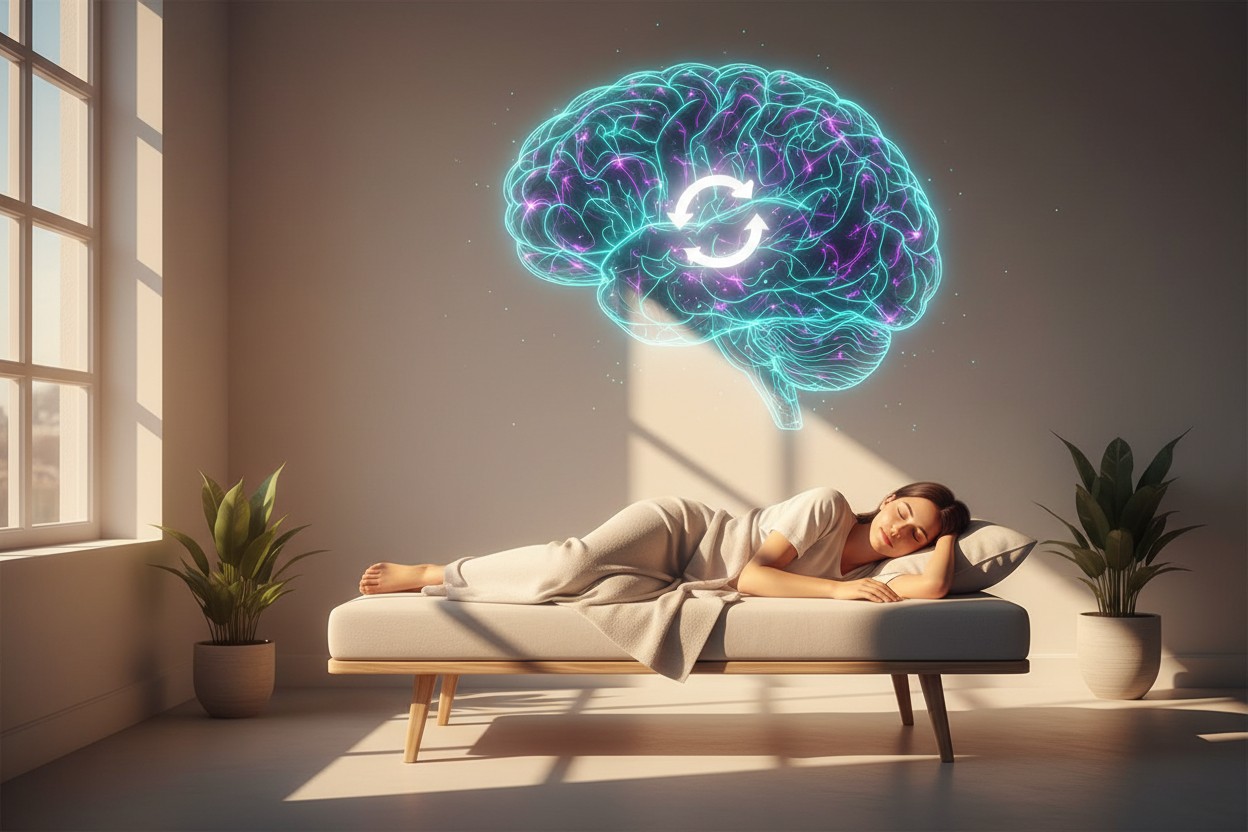
A study published in the journal NeuroImage found that a 45-minute afternoon nap can reduce synaptic strength and increase the brain's capacity for new learning, according to a report by NaturalNews.com [1]. Researchers from the University of Freiburg studied 20 healthy adults and observed that participants who napped between 1:15 and 2:15 p.m. showed improved neural flexibility compared to when they stayed awake during the same period [2]. The study used electroencephalography (EEG) and transcranial magnetic stimulation (TMS) to measure brain activity before and after sleep or wakefulness.
How the study was conducted
Each participant completed two sessions in a controlled sleep lab on different days: one with a nap and one without, according to a mindbodygreen.com report [2]. The nap timing was aligned with the natural circadian dip that many people experience in the early afternoon, the report stated. On average, participants slept for about 45 minutes, spending most of that time in light to moderate sleep stages. Brain activity was assessed using EEG, which measures electrical brain rhythms, and TMS, which allowed researchers to probe how easily brain cells could form new connections, according to the report [2]. This combination gave researchers insight into both overall synaptic strength and the brain's capacity for plasticity.Brain mechanisms observed
After the nap, participants showed reduced overall synaptic strength paired with an increased ability to form new synaptic connections, according to Willow Tohi's article on NaturalNews.com [1]. The brain appeared less saturated, allowing for more efficient encoding of new information, the article said. The changes mirrored those seen after a full night's sleep but on a smaller, faster scale, according to the study [1]. Throughout the day, synapses gradually strengthen as information is taken in, but when too many connections are maxed out the brain becomes less flexible, as noted in Tony Schwartz's book "The way were working isnt working" which describes how a short nap limited to stages 1 and 2 can provide restorative effects without entering deep sleep [3]. The nap seemed to act as a reset by gently dialing down overall synaptic activity, creating space for new learning, according to the NeuroImage study as reported by NaturalNews.com [1].Implications and limitations
Study authors emphasized that naps are not a substitute for chronic sleep deprivation, according to the mindbodygreen.com report [2]. Cognitive behavioral therapy for insomnia (CBT-I) remains the gold standard for insomnia treatment, the report stated. For well-rested individuals, occasional naps may optimize learning capacity during high-demand periods, according to the study authors [1]. Potential applications include students, athletes, and creative professionals facing cognitively intense work, according to the article by Willow Tohi [1]. Previous research from Flinders University found that napping re-energizes a person and improves cognitive function, and that those who regularly nap feel more alert in the afternoon compared to occasional nappers, according to an article on NaturalNews.com [4]. Additionally, a Northwestern University study found that 90-minute naps boost motor skills and memory [5].Guidelines for napping
The study suggests a nap duration of 30 to 60 minutes for synaptic recalibration without entering deep sleep, according to the mindbodygreen.com report [2]. Timing between 1 and 3 p.m. is recommended to avoid interfering with nighttime sleep, the report stated. Mark E. Williams, author of "The art and science of aging well a physicians guide to a healthy body mind and spirit," notes that a short siesta of twenty to thirty minutes can be refreshing without disrupting the nighttime sleep cycle, and that a normal feature of the circadian sleep cycle is to feel slightly sleepy right after lunchtime [6]. Consistency is not required; benefits may be obtained from occasional naps in a low-stimulation environment, according to the report [2]. Schwartz's book recommends that a power nap limited to stages 1 and 2 -- under 30 minutes -- avoids the deeper sleep of stages 3 and 4, allowing alertness almost immediately upon waking [3].References
- NaturalNews.com. "The afternoon reset: How a short nap reboots your brain for learning." Willow Tohi. January 28, 2026.
- mindbodygreen.com. "What A Short Afternoon Nap Actually Does to Your Brain." Ava Durgin. May 10, 2026.
- Tony Schwartz. "The way were working isnt working."
- NaturalNews.com. "Replace your afternoon caffeine boost with a nap: Research shows it works just as well to improve cognitive function." February 11, 2018.
- NaturalNews.com. "New research shows 90-minute naps boost motor skills and memory." October 31, 2021.
- Williams Mark E. "The art and science of aging well a physicians guide to a healthy body mind and spirit."
Mastodon
Parler
Gab
Copy
Tagged Under:
brain function natural medicine sleep research brain health natural health mental naturopathy mind remedies cognitive health discoveries Censored Science mind body science goodscience goodhealth goodmedicine health science afternoon nap
You Might Also Like

Almonds Cited as Potential Bedtime Snack for Improved Sleep Quality
By Coco Somers // Share

Fermented foods gain attention for their gut health benefits
By Evangelyn Rodriguez // Share

Study: Omega-3 DHA Linked to Improved Working Memory and Cognitive Function Across Lifespan
By Coco Somers // Share

These preservatives are now linked to high blood pressure and heart disease risk
By Lance D Johnson // Share

Peppermint oil supplements lower blood pressure in study, researchers say
By Coco Somers // Share

Recent News






Popular This Week