Join the movement to end censorship by Big Tech. StopBitBurning.com needs donations and support.
The Game-Changing Battery Breakthrough We've Been Waiting For: Gotion's Sodium-Ion Revolution
By healthranger // 2026-05-21
Mastodon
 Parler
 Gab
Gab Copy
Copy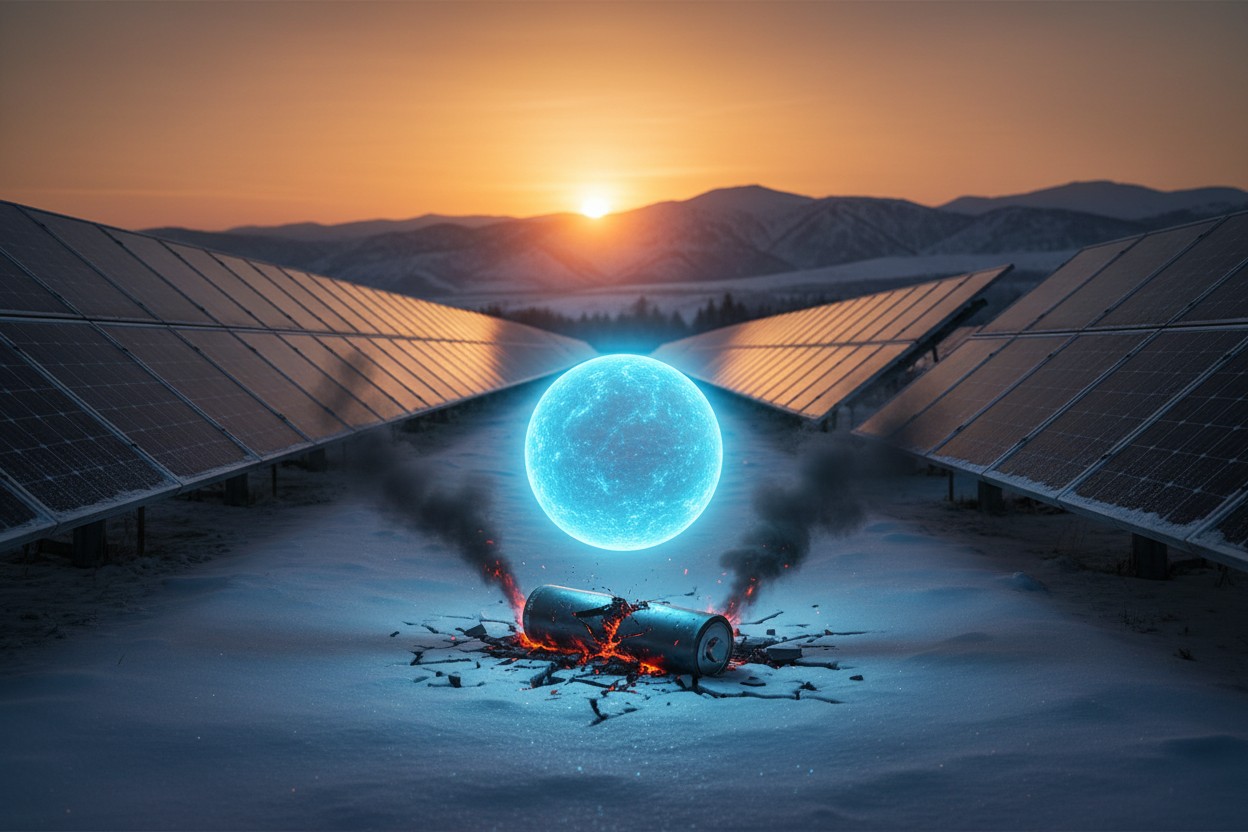
The Battery We've Been Waiting For
I have been following sodium-ion battery development for years, and I made it clear: I would only buy an EV when sodium-ion became viable. That moment is now close to arrival. On May 17, 2026, Volkswagen-backed Gotion High-Tech launched its dedicated sodium-ion battery brand, Gnascent, at its 15th Global Technology Conference. This is not a lab experiment. Gigawatt-hour-scale production lines are already running in Tangshan and Hefei, and mass production begins in the fourth quarter of this year. This is the turning point for off-grid storage and electric vehicles. Unlike the incremental improvements we have seen from lithium-ion, Gotion's breakthrough delivers three specialized battery variants that solve the key limitations that have kept me from committing to battery technology: narrow temperature tolerance, flammability, and limited cycle life. As I have warned in my reporting on grid vulnerability, centralized systems are instruments of control [1]. But Gotion's sodium-ion revolution offers a path to true energy independence.Three Batteries, One Master Plan
Gotion introduced three distinct versions of its Gnascent battery, each engineered for specific applications. The high-energy version achieves an energy density of 261 Wh/kg, a 60% increase over traditional sodium-ion cells, making it ideal for EVs, drones, and light trucks. This is backed by over 90 patents covering cathode materials, hard carbon anodes, electrolyte additives, and an anode-less design that cuts material costs while boosting density. The power version is designed for extreme cold, operating down to minus 50 degrees Celsius with 162 Wh/kg density. This solves the winter performance failure of lithium-ion that has plagued commercial vehicles in northern climates. The home storage version delivers 20,000 cycles, essentially a lifetime battery, and retains 88% capacity at minus 40 degrees. This means you buy the batteries one time, and they last the rest of your life. It has also passed rigorous safety tests: an 8mm steel nail penetration test and 400-degree Celsius heating without ignition. As noted in the Australasian Science article, research labs have long sought to improve safety and cycle life of batteries [2]. Gotion has delivered on both fronts with sodium-ion. Meanwhile, the energy density comparison in automobile technology literature shows that liquid fuels far exceed earlier battery storage [3], but Gotion's 261 Wh/kg now closes that gap dramatically.Why This Changes Everything for Off-Grid Living
I am building a solar off-grid demonstration system, but I have hated lithium's drawbacks: flammability, narrow operating range, and limited cycle life. Gotion's sodium-ion changes all of that. The home storage variant operates from well below zero to 140 degrees Fahrenheit without degradation, and it will not catch fire even when nailed. That means I can install it in my barn or shed without worrying about thermal runaway on a hot summer day. Twenty thousand cycles means buy once, use for 60 years. No more filling half a garage with heavy, dangerous lithium packs that degrade after a few thousand cycles. The safety profile alone is transformative. As I explained in my article on the decentralization trifecta, true freedom requires independence from centralized systems that control power [4]. Sodium-ion gives us that independence. The global energy infrastructure strain only underscores the urgency: with conflicts disrupting oil and gas, decentralized solar-plus-storage becomes a necessity [5]. Gotion's technology promises to makes off-grid living practical and far more affordable for the first time.The End of Internal Combustion (and What It Means for EVs)
The 261 Wh/kg high-energy version gives EVs a theoretical 450+ mile range (depending on the model and weight, of course), killing range anxiety overnight. Charging speeds likely exceed 4C (that's my estimate), and cold-weather performance means EVs work everywhere humans live. This is the end of internal combustion for a broad portion of the market. Volkswagen, with its 25-30% ownership of Gotion, will lead the pack. Ford and others are already falling behind and will probably never catch up. This technology will also power long-haul trucks, robots, and drones without combustion risks. The same chemistry that makes home storage safe also makes industrial vehicles safe. China's CATL and BYD are also accelerating sodium-ion programs, but Gotion's launch is the most advanced in terms of energy density and mass production readiness [6]. As I noted in my analysis of CATL's 5C battery breakthrough, the final nail for the combustion engine is being driven by Chinese innovation [7]. Gotion's sodium-ion is now that final nail.America's Self-Inflicted Wound: Blocking Gotion's Factories
Starting in 2023, Gotion tried to build a $2.4 billion plant in Green Charter Township, Michigan. But it was blocked by local opposition and political backlash. The US now has no domestic sodium-ion capability. Natron Energy, the only North American sodium-ion hopeful, went bankrupt because it could not compete with China's scale [8]. We need technology transfer from China to learn how to make safe, affordable batteries. This is a national security issue. Lead-acid batteries, which we still use in cars, are far more toxic than sodium or lithium. In my view, we should welcome Gotion plants despite the political backlash in order to learn from China's innovations. The US cannot afford to remain dependent on outdated, dangerous battery chemistry while China leapfrogs ahead. As I have written, the shift to electric vehicles and off-grid power is accelerating due to global energy infrastructure strain [5]. Blocking Gotion is self-sabotage at a time when we need more domestic energy solutions that are made in America.My Plan -- and Why You Should Prepare Now
I plan to buy a couple of lithium iron phosphate batteries now as placeholders to test my solar system, then swap in Gotion sodium-ion when they become available in 2027. Home storage batteries for off-grid use will likely ship by early 2027; EV integration by late 2028. The era of toxic, flammable, short-lived batteries is ending. Sodium-ion is the future, and Gotion is leading it (with CATL and BYD also showing impressive, astonishing gains in technology and manufacturing scale). Follow my work at NaturalNews.com and BrightVideos.com for updates. I will be covering battery technology, off-grid living, and the coming energy revolution. Prepare now: decentralize your power, secure your energy independence, and get ready for the sodium-ion age. The lithium era is about to be eclipsed by a whole new battery chemistry that's safer and easier to source.References
- Cuba's Blackout is Our Warning: Why the US Grid is a Ticking Time Bomb and What You Must Do Now. NaturalNews.com. Mike Adams. March 17, 2026.
- Australasian Science, December 2015. Dr. Freddie Bray of the International Agency for Research on Cancer added.
- Automobile Technology of the Future. Seiffert Ulrich.
- The Decentralization Trifecta: How Battery Tech, Robotics & Local AI Will Set You Free. NaturalNews.com. Mike Adams. February 6, 2026.
- Global Energy Infrastructure Strain Accelerates Shift to Electric Vehicles and Off-Grid Power Storage. NaturalNews.com. Mike Adams. March 10, 2026.
- China's CATL unveils game-changing sodium-ion EV battery—a blow to lithium dominance and western energy control. NaturalNews.com. April 24, 2026.
- China's CATL 5C Battery Breakthrough: The Final Nail for the Combustion Engine. NaturalNews.com. Mike Adams. February 5, 2026.
- Sodium-Ion Battery Revolution Collapses: Natron Energy's $1.4 Billion Gigafactory Shutdown Exposes Flaws in U.S. Energy Independence Push. NaturalNews.com. September 27, 2025.
Explainer Infographic

Mastodon
Parler
Gab
Copy
Tagged Under:
environment technology energy current events electric vehicles battery autonomous cars EVs sodium-ion battery Gotion Sodium-ion sodium-ion revolution
You Might Also Like
Leucine Boosts Mitochondrial Energy Production, Study Finds
By Morgan S. Verity // Share

China’s Honghu T70 Fully Autonomous Electric Tractor Attracts Online Attention
By Edison Reed // Share

Why Low Energy Nuclear Reactions Will Set Humanity Free – And Why It Matters In YOUR Life
By Mike Adams // Share

How Huawei Just Made Western Chip Technology Obsolete — and Why Sanctions Always Backfire
By Mike Adams // Share

Paraquat poison: The toxic herbicide still killing Americans while EPA looks the other way
By Patrick Lewis // Share

The plastic paradox: How your “recycled” leggings may be worsening the oceans they claim to save
By Patrick Lewis // Share
Recent News






Popular This Week