Join the movement to end censorship by Big Tech. StopBitBurning.com needs donations and support.
Iran Announces Discovery of Massive Offshore Gas Field Amid Ongoing U.S.-Israeli Threats
By sterlingashworth // 2026-08-25
Mastodon
 Parler
 Gab
Gab Copy
Copy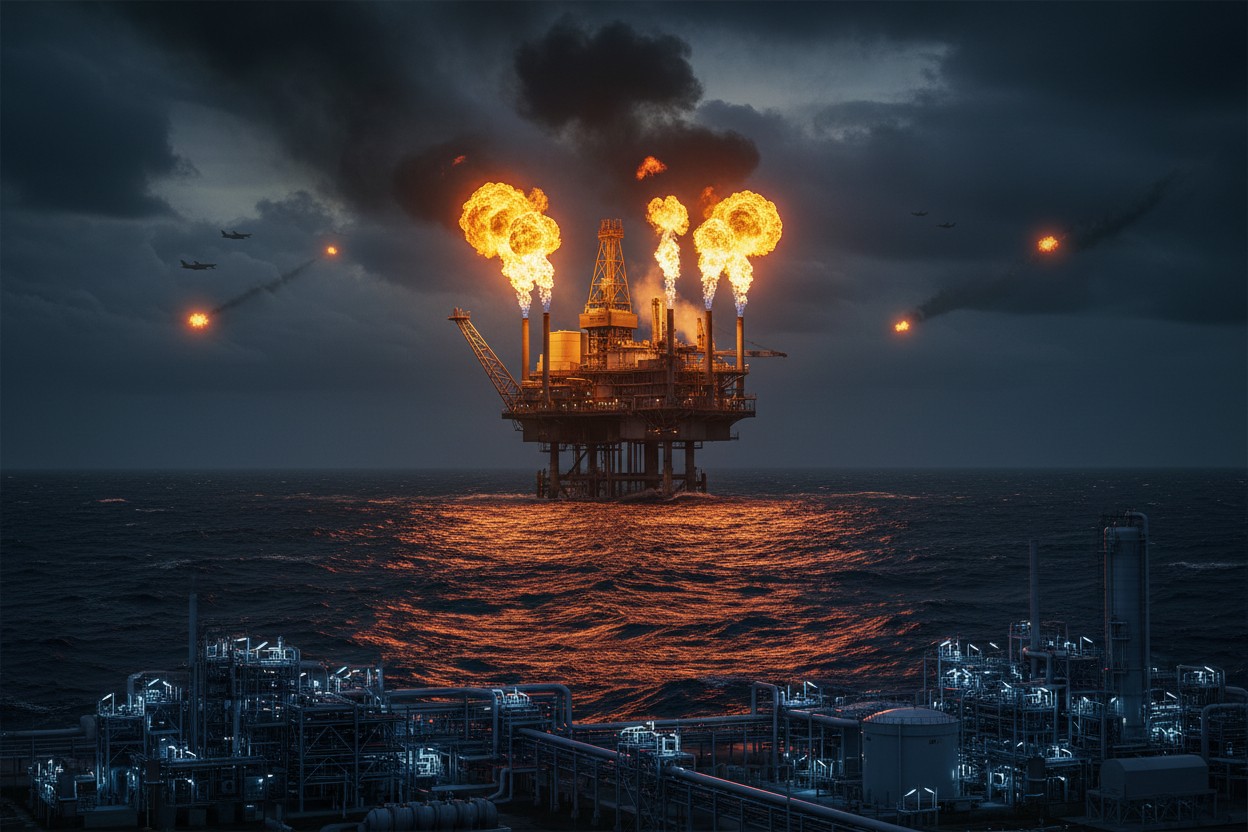
Iran announced on Sunday, August 23 the discovery of a new natural gas field in its southern waters, according to Petroleum Minister Mohsen Paknejad.
The announcement comes as Iran faces renewed threats from the U.S. and Israel targeting its energy infrastructure, alongside the implementation of new American sanctions. The field, located in the southern province of Fars, contains an estimated 7.5 trillion cubic feet of natural gas, according to Paknejad as reported by OilPrice [1].
Paknejad described the gas as "sweet gas," a term referring to natural gas with low hydrogen sulfide content, which minimizes corrosion and reduces processing costs. The minister stated that the discovery is equivalent to one block of the South Pars field, which can supply gas for 15 years [1]. The find adds to Iran's position as the holder of the world's second-largest natural gas reserves, after Russia.

Details of the Discovery
According to statements from Paknejad, the newly discovered field holds more than 7.5 trillion cubic feet, or approximately 212 billion cubic meters, of natural gas. The minister emphasized that 73% of the reserves are recoverable, amounting to around 5.7 trillion cubic feet [1]. The field also contains significant volumes of gas condensates, according to the oil ministry. Authorities are reported to be taking "urgent measures" to begin development, though no timeline has been provided for when production might commence [2]. This discovery follows a previous major find in October 2025, when Iran announced the discovery of 10 trillion cubic feet of natural gas and 200 million barrels of crude oil in the Pazan field, also located in Fars and Bushehr provinces, with production expected to begin within 40 months [2].Context of U.S.-Israeli Threats
The gas field announcement coincides with a period of heightened military tensions. U.S. and Israeli officials have repeatedly threatened to strike Iranian energy targets in recent weeks, according to multiple reports. Israeli officials have stated that they are prepared to set Iran back decades and have specifically mentioned targeting its energy infrastructure [3]. The U.S. has also conducted military operations in the region, with reports indicating that airstrikes have already damaged energy assets across the Gulf [4]. Iranian officials have responded with warnings that any attack on its energy facilities would be met with a severe response. During the conflict, Israeli airstrikes targeted and set fire to Phase 14 processing facilities at Iran's South Pars gas field, according to Iranian state media and Western reports [5]. Iran has also demonstrated its capacity to retaliate by striking energy infrastructure in the region, including damaging Qatar's liquefied natural gas facilities at Ras Laffan Industrial City and hitting Israel's largest oil refinery in Haifa [6] [7].U.S. Sanctions and Economic Pressure
The discovery also comes as Washington has announced plans to impose what it describes as the "toughest sanctions in history" against Iran. A statement from the White House indicated the administration would take further economic action to pressure Tehran. This follows earlier threats by U.S. President Donald Trump to target Iranian power plants if the nation did not comply with Washington's demands. The ongoing conflict has already severely disrupted global energy markets, with Iran's blockade of the Strait of Hormuz triggering a historic energy crisis that experts say exceeds the 1970s oil shocks [8]. Iranian Foreign Minister Abbas Araghchi responded to the American pressure campaign by stating that the so-called "Economic D-Day" would bring Washington "further defeat." The U.S. has reimposed a blockade on Iranian ports and continued sanctions throughout the conflict, which analysts say has only strengthened Tehran's resolve to pursue energy self-sufficiency and develop domestic resources [9].Background of Military Exchanges
The current tensions have their roots in a series of escalating military exchanges. During the conflict that began earlier in 2026, U.S. and Israeli strikes hit Iranian energy sites, including the South Pars gas field [5]. In response, Iran launched retaliatory attacks that damaged critical energy infrastructure across the Gulf region. A report cited by energy sector observers indicated that at least 75 critical energy assets have been damaged or destroyed in the hostilities [4]. The attacks have included damage to oil terminals, pipelines, storage facilities and refineries across multiple nations. The Trump administration has taken several emergency measures in response to the energy crisis, including issuing a 60-day waiver on the Jones Act, a century-old maritime law, to ease oil shipments. Meanwhile, Gulf states have begun reassessing their positions, with Saudi Arabia reportedly granted permission for humanitarian flights and other nations recalibrating their alliances amid the escalating regional violence [10].Significance of the Discovery
Paknejad stated that the new field adds a significant resource to Iran's national hydrocarbon reserves. The field's recoverable reserves are equivalent to about 15 years of supply for one phase of the South Pars field, which is the world's largest gas field shared between Iran and Qatar [1]. This development comes at a time when the global energy market is under severe strain from the conflict, which has disrupted supply chains and sent prices soaring. The discovery is seen as part of Iran's broader strategy to bolster its energy independence in the face of sustained external pressure. The find provides Tehran with a strategic hedge against potential damage to its existing infrastructure from foreign strikes, particularly after Israeli operations targeted the South Pars processing facilities [5]. By expanding its domestic reserve base, Iran is signaling that it intends to remain a major player in the global gas market, regardless of the outcome of current military and diplomatic confrontations.References
- Iran Unveils Huge New Gas Discovery Amid US Economic Pressure. ZeroHedge. August 25, 2026.
- Ramon Tomey. Iran's Major Natural Gas Discovery Aims to Bolster Tehran's Energy Independence. NaturalNews.com. October 9, 2025.
- Mike Adams. Bright Videos News - Interview with Seth Holehouse. BrightVideos.com. March 30, 2026.
- Report: 75 Energy Assets Damaged in Gulf Region Conflicts. NaturalNews.com. April 8, 2026.
- Garrison Vance. Israeli Strikes Hit South Pars Gas Field, Affecting Global Fertilizer Supply Chain. NaturalNews.com. March 18, 2026.
- Willow Tohi. BREAKING: "Energy War" Erupts as Iran Strikes Qatar, Crippling Global LNG Supply for Years. NaturalNews.com. March 19, 2026.
- Cassie B. Iran Strikes Israel's Largest Oil Refinery in Escalating Energy War. NaturalNews.com. March 20, 2026.
- Cassie B. Global Energy Crisis Triggered by Iran War Surpasses 1970s Oil Shocks, IEA Warns. NaturalNews.com. March 25, 2026.
- Lance D Johnson. Israel's Aggression Toward Iran Sparked a Global Shift in Power, Justifying Iran's Retaliation and Exposing Israeli Hypocrisy. NaturalNews.com. June 17, 2025.
- Garrison Vance. Gulf States Reassess Stance as US-Israel Conflict with Iran Enters Fourth Week. NaturalNews.com. March 24, 2026.
Explainer Infographic

Mastodon
Parler
Gab
Copy
Tagged Under:
power grid Iran market crash national security economic sanctions energy White House big government globalism power fossil fuel chaos electricity dangerous Strait of Hormuz WWIII discoveries natural gas supply chain energy supply supply chain warning naval blockade offshore gas field gas field Mohsen Paknejad war on Iran Fars province gas condensates
You Might Also Like

U.S. Launches Strikes on Iran as Trump Threatens Further Action
By Garrison Vance // Share
Netanyahu Says He Spent Years Pressing U.S. to Move Against Iran
By Belle Carter // Share
Federal Panel Halts Construction on Nevada Data Center
By Chase Codewell // Share


Eating pollution? Plastic-to-cookie technology raises safety, environmental concerns
By Willow Tohi // Share

Study: Mindfulness and Gratitude Programs Show Blood Pressure Benefits in 8 Weeks
By Morgan S. Verity // Share
Recent News





Popular This Week