Join the movement to end censorship by Big Tech. StopBitBurning.com needs donations and support.
6 Potential Health Benefits of the Superfruit Soursop
By ivagreene // 2026-09-26
Mastodon
 Parler
 Gab
Gab Copy
Copy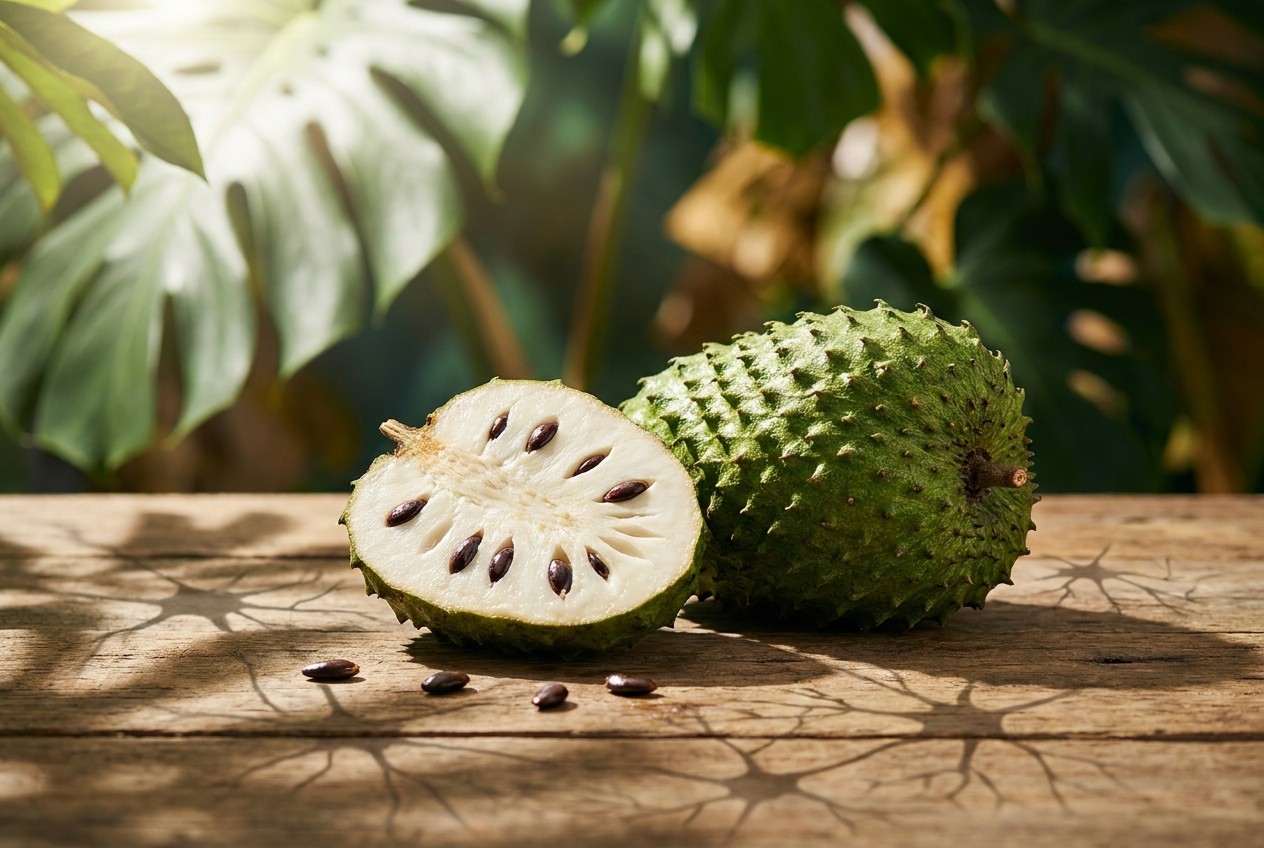
Soursop, a green tropical fruit also known as graviola or guanabana, has been associated with six reported health benefits that remain largely based on limited research, according to a Sept. 20 report.
The fruit is native to the tropical regions of the Caribbean and Central and South America, and is also grown in tropical areas of Africa, Southeast Asia, and Australia, according to Sharon Tyler Herbst and Ron Herbst, authors of "Food Lover's Companion" [1].
Author Leslie Taylor describes graviola as a small, upright evergreen tree, 5-6 meters high, with large, glossy, dark green leaves that produces a large, heart-shaped, edible fruit 15 to 20 centimeters in diameter that is green in color, with white flesh inside [2]. The fruit is commonly consumed in juices, ice cream, jams and candies across its native regions, and its pulp has been found in European, North American, and Brazilian markets, according to researchers publishing in Food and Bioproducts Processing [3].
The 2026 report stated that soursop offers fiber, vitamin C, copper, potassium and other nutrients, but that human evidence for many of the claimed benefits remains limited. Natural health advocates have long pointed to the fruit's traditional uses, while conventional medical authorities continue to call for more rigorous human trials [10].

What Nutrients Does Soursop Offer?
According to the U.S. Department of Agriculture (USDA) FoodData Central, a 1-cup serving of raw soursop provides 148 calories, 7.42 grams of fiber, 2.25 grams of protein, and 0 grams of added sugar. The same serving offers 46.4 milligrams of vitamin C, plus copper, potassium, iron, magnesium, and folate. The 2026 report noted that the fiber in one cup meets 26.5% of the Daily Value, and that potassium supports muscle contraction and blood pressure regulation. The fruit's nutrient profile places it within a category of tropical fruits that natural health practitioners frequently recommend for their fiber and micronutrient content [10].Potential Health Benefits
The 2026 report identified six areas of research interest. On digestion, it cited a 2023 review finding that high fiber intake lowers the risk of stomach and colorectal cancer, noting that soursop contains both soluble and insoluble fiber. On inflammation, the report stated that soursop contains antioxidants such as phenolic compounds and vitamin C that may neutralize free radicals and reduce oxidative stress [10]. For blood pressure, the report cited a 2020 study in which 143 people with borderline hypertension drank 7 ounces of soursop juice daily for three months and showed lowered blood pressure compared with a control group. On blood sugar, it said older animal studies found that soursop extracts inhibit enzymes that break down carbohydrates into glucose, which may slow sugar absorption. On anticancer effects, the report cited a 2018 review finding that animal and in vitro studies showed soursop extract helped target cancer cells, but stated that more human research is needed. Earlier research has drawn significant attention[10]. On antibacterial effects, the report cited a 2016 in vitro study finding soursop leaf extract effective against Streptococcus bacteria in oral infections, though human studies are lacking.Risks and Safe Consumption
The 2026 report stated that acetogenins in soursop may be toxic at high doses and that long-term consumption may increase the risk of atypical Parkinsonism, a group of neurological conditions similar to Parkinson's disease. The author also advised that regular consumption of soursop and other acetogenin-containing fruits may worsen degenerative Parkinsonism, including Parkinson's disease. Soursop seeds are toxic and should be removed during preparation. Preparation steps include choosing a ripe yellowish-green fruit, washing it, peeling the skin, cutting it lengthwise and scooping out the seeds. The report recommended consuming soursop sparingly and checking with a doctor before use for people with neurological conditions. Soursop is available at specialty stores, farmers' markets, and online. You can use it in recipes such as juice, ice cream, sorbet, and smoothies. The 2026 report concluded that soursop's reported benefits are mostly based on limited research, and that more studies are needed to understand its effects in humans.References
- Sharon Tyler Herbst and Ron Herbst. "Food Lover's Companion". Leslie Taylor. "The Healing Power of Rainforest Herbs A Guide to Understanding and Using Herbal Medicinals".
- Elsevier. "Laminar flow of soursop juice through concentric annuli: Friction factors and rheology". Food and Bioproducts Processing. 2006.
- Elsevier. "Adding lignan values to a food composition database". Journal of Food Composition and Analysis. 2007.
- "Is this fruit extract 10000 times better than chemo". NaturalNews.com. June 14, 2024.
- "Another medical benefit of the soursop: It kills triple negative breast cancer". NaturalNews.com. October 24, 2018.
- "Edible Medicinal and NonMedicinal Plants Volume 1".
- "Reduce fibromyalgia pain with soursop - new finding". NaturalNews.com. December 10, 2018.
- XPP. "Quantification of Acetogenins in Annona muricata Linked to Atypical Parkinsonism in Guadeloupe". Journal of Neuroscience.
- XPP. "Atypical Unclassifiable Parkinsonism on Guadeloupe: An Environmental Toxic Hypothesis". Journal of Neurology.
- "Soursop: 6 Benefits of Adding It to Your Diet". Health.com. September 22, 2026.
Explainer Infographic

Mastodon
Parler
Gab
Copy
Tagged Under:
blood sugar superfoods nutrition natural medicine antioxidants nutrients fresh natural healing natural remedies natural health natural cures natural antibiotics fruits phytonutrients organics anticancer diabetes cure food cures food is medicine goodhealth goodfood grocery cures soursop
You Might Also Like

Prebiotic Fruits Tied to Gut Health in Nutrition Reports
By Coco Somers // Share

7-Day Low-Plastic Trial Linked to Reductions in Hormone-Disrupting Chemicals, Study Reports
By Coco Somers // Share

Forget rereading: Research says these study methods actually make information stick
By Cassie B. // Share
Health Report Lists 10 Foods Linked to Heart and Gut Health
By Morgan S. Verity // Share

Single Caffeine Dose May Boost Exercise Performance for 3.5 Hours, Study Finds
By Chase Codewell // Share
Recent News






Popular This Week