Join the movement to end censorship by Big Tech. StopBitBurning.com needs donations and support.
Poland's illegal migrant overstays jump 40% as border agency warns of crisis
By isabelle // 2026-09-24
Mastodon
 Parler
 Gab
Gab Copy
Copy
- Poland's Border Guard identified 8,300 illegal foreign residents from January through August 2026, a 40% jump over the same period last year.
- Ukrainians and Colombians make up the largest shares of those detained, followed by Georgians, Belarusians and Moldovans.
- Experts warn Poland is entering a full-scale crisis as forged documents, informal rentals and shell companies let migrants operate outside the law.
- Unregistered foreigners pose added security risks, officials say, since they are harder to track and could be exploited for sabotage or other hostile activity.
- The overstay surge stands in sharp contrast to Poland's success sealing new Belarus border crossings, which collapsed from 15,500 to just 235 this year.
Extensive shadow networks enable illegal work and housing
A sophisticated support infrastructure allows foreigners to operate outside Poland's legal framework, including forged visas and work permits, informal apartment rentals, and fictitious companies created specifically to obtain work visas for migrants, according to Polish news outlet Rzeczpospolita. Tomasz Safjański, a professor at WSB University in Dąbrowa Górnicza and deputy director of the Center for Research on Cross-Border Security, warned that when a state controls its border but loses the ability to determine who remains after residence rights expire, a "security gap" emerges. Experts point to a growing shadow economy where illegal employment allows employers to avoid taxes and social-security contributions, while raising the risk of organized crime including human trafficking and document forgery.Intelligence concerns grow over unmonitored foreign populations
People who remain outside Poland's official registration system pose particular security risks. Officials interviewed by Rzeczpospolita said such individuals are harder to track and could be exploited by foreign intelligence services to carry out sabotage or other hostile operations. The Polish Border Guard runs ongoing enforcement sweeps targeting people who have exceeded their permitted residence period, are working without the required permit, are using invalid documents, or were previously barred from Poland or other Schengen countries; officers also detain people who had earlier been ordered to leave the European Union.Crackdown operations expand nationwide
In an earlier nationwide operation conducted March 2–3, Polish police and Border Guard deployed more than 26,000 officers in a two-day sweep targeting wanted foreign nationals. Interior Minister Marcin Kierwinski reported that 147 foreigners wanted by Polish law enforcement were detained, with 140 identified as staying illegally. Return proceedings were initiated against over 130 of those detained, with illegal stay cited as the reason in nearly 110 cases and national security threats cited in over 20 cases. The largest groups checked were from Ukraine, Colombia, and Nepal. This marked the fourth such operation, following 2025 raids that detained 4,766 people including 515 foreigners. Between January 1 and March 1, Poland also transferred 33 foreigners back to Lithuania and 13 to Germany under readmission procedures. The accelerating crisis underscores what security analysts describe as Poland's deteriorating ability to track and manage foreign populations already within its borders — a gap that stands in sharp contrast to Warsaw's success at sealing new entries. Attempted illegal crossings from Belarus collapsed from roughly 15,500 in the first half of 2025 to just 235 in the same period this year, according to Poland's Border Guard, after the country built a 5.5-meter steel fence and deployed thousands of additional troops along the frontier. Without comparable resources devoted to interior enforcement, migrants who arrive through legal channels or slip through gaps in an overwhelmed visa and residency system appear increasingly free to vanish into the shadow economy once they are inside the country. Sources for this article include: RMX.news NotesFromPoland.com FoxNews.com InfoMigrants.netMastodon
Parler
Gab
Copy
Tagged Under:
collapse Ukraine illegal immigration corruption border security conspiracy Border Patrol globalism migrants Open border chaos Poland bias government debt debt bomb
You Might Also Like

USPS to Test Road-Scanning Cameras in Mail Trucks
By Edison Reed // Share
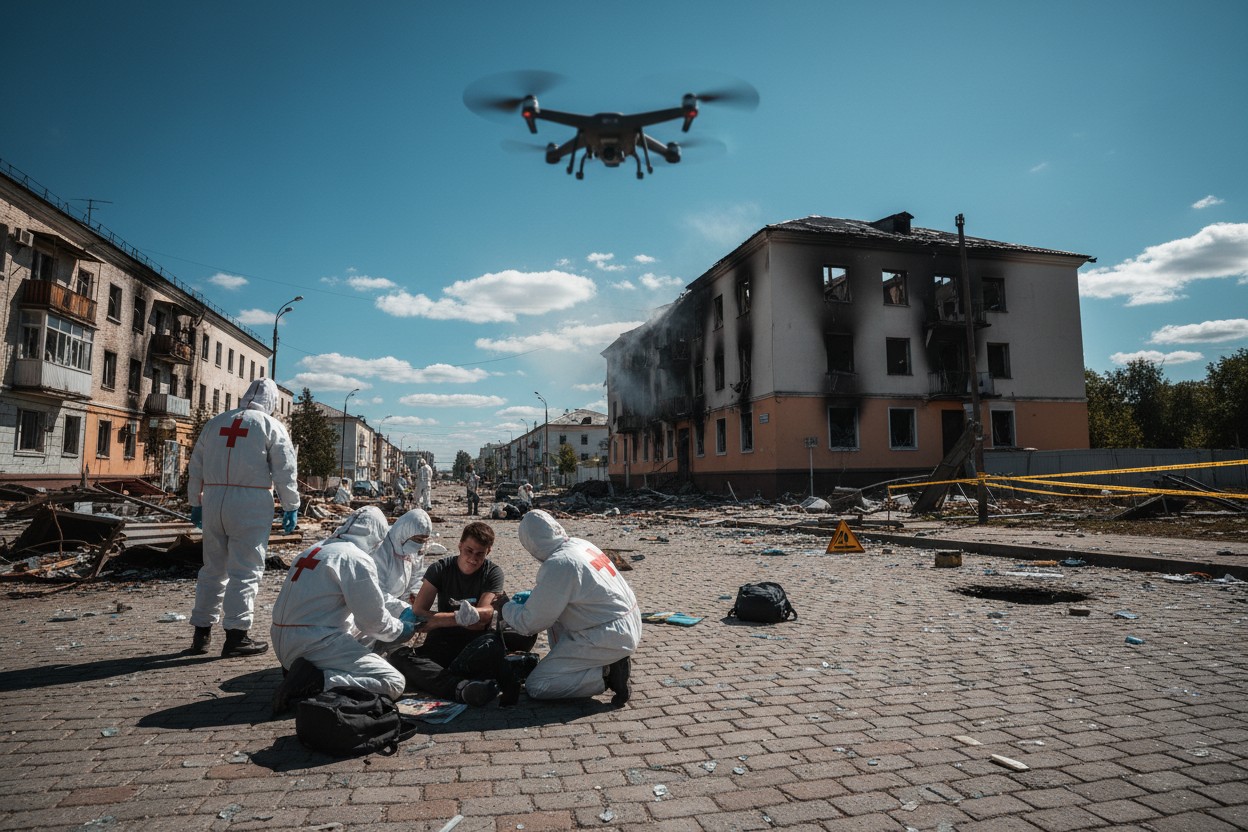
Ukrainian Strike on Russian Town Leaves 12 Civilians Injured, Official Says
By Garrison Vance // Share

Oil prices retreat as Middle East export recovery tempers Iran war fears
By Ramon Tomey // Share
By Lance D Johnson // Share

Global Crop Prices Post Largest Quarterly Jump Since Ukraine Invasion, Index Shows
By Sterling Ashworth // Share

Is the West scapegoating Benjamin Netanyahu to protect its genocidal enterprise in the Middle East?
By Lance D Johnson // Share
Recent News





Popular This Week