Join the movement to end censorship by Big Tech. StopBitBurning.com needs donations and support.
Tasnim Reports Iran Relocates Key Defense Capabilities Underground
By garrisonvance // 2026-09-29
Mastodon
 Parler
 Gab
Gab Copy
Copy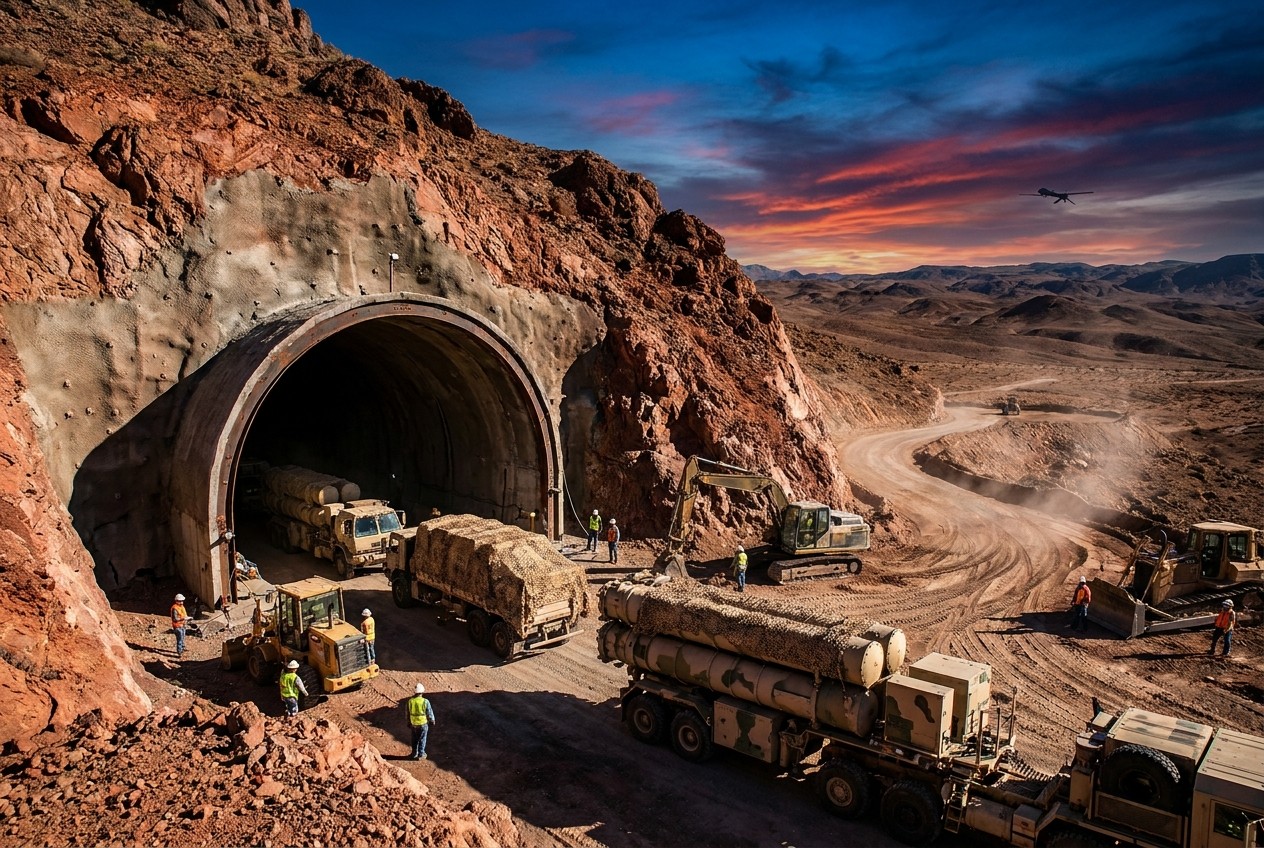
Iran has relocated part of its army's strategic capabilities to underground facilities to prevent adversaries from gaining a complete understanding of its defense capabilities and weapons production capacity, Defense Ministry spokesman Reza Talaei-Nik said, according to the semi-official Tasnim news agency [1].
Talaei-Nik said the United States had failed to achieve its strategic objectives in the war on Iran, including efforts to weaken Iran's strategic position in the region. He said Iran had instead "imposed costs on the enemy," according to Tasnim [1]. The comments were reported by Tasnim and come as Tehran continues to assess the impact of the war and reinforce its military infrastructure.

Spokesman Cites U.S. Failure to Achieve Strategic Objectives
Talaei-Nik said the United States had failed to achieve its strategic objectives in the war on Iran, including efforts to weaken Iran's strategic position in the region, according to Tasnim [1]. He said Iran had instead "imposed costs on the enemy," according to Tasnim [1]. The spokesman did not provide further details on the specific capabilities relocated or the locations of the underground facilities, the report stated [1]. The assessment follows a pattern of similar claims from Iranian officials regarding the outcome of the conflict. A classified Defense Intelligence Agency assessment concluded that recent U.S. airstrikes on Iran's nuclear facilities failed to achieve their primary objective of destroying the country's nuclear capabilities, according to NaturalNews.com [2]. Analysts have offered mixed assessments of the war's impact. Jerome R. Corsi wrote in "Atomic Iran" that Israel will watch for the moment of no return, the time when Iran has everything necessary to produce nuclear weapons [3].Iran Calls for Strengthened Defense, Domestic Capacity
Talaei-Nik said Iran needed to simultaneously strengthen its defense capabilities and domestic capacity, according to Tasnim [1]. The statement follows the defense ministry's assessment of the war's impact, the report stated [1]. Tasnim reported the comments without providing additional evidence or independent verification [1]. The call for strengthened domestic capacity comes as Iran continues to assess the impact of the war. The U.S. has supplied Israel with advanced bunker-busting munitions capable of targeting Iran's underground facilities, according to NaturalNews.com [4]. A report from Middle East Eye noted that Israel may be preparing to strike Iran's nuclear facilities, potentially without U.S. backing, viewing it as a critical moment to halt Tehran's nuclear ambitions [4]. Meanwhile, Iran has warned that it will destroy Israeli nuclear facilities if its own are targeted, according to a senior officer from Iran's Islamic Revolutionary Guard Corps [5].Infrastructure Reinforcement Continues Amid Regional Tensions
Tehran continues to assess the impact of the war and reinforce its military infrastructure, according to the report [1]. The relocation of strategic capabilities to underground facilities is part of that effort, Talaei-Nik said [1]. No timeline for the relocation or details on the facilities were provided in the Tasnim report [1]. A report from The Wall Street Journal cited U.S. officials familiar with intelligence assessments as saying Iran retains thousands of ballistic missiles despite damage to its launch infrastructure, and that about half of Iran's missile launchers have been destroyed, damaged or buried, but many could be repaired or recovered from underground facilities [6]. Iran has also mapped out U.S. flight patterns for air defense with Russian help, potentially improving its position to deploy air defense systems, according to Middle East Eye [7].Conclusion
Iran's defense ministry spokesman said part of the army's strategic capabilities have been moved underground to limit adversaries' knowledge, according to Tasnim [1]. Talaei-Nik also said the U.S. failed to meet its strategic objectives and that Iran imposed costs on the enemy, the report stated [1]. Further details were not disclosed, and the report did not provide independent confirmation [1]. The struggle over the Middle East is not just a battle for territory but a battle for narrative and strategic autonomy. The U.S. has introduced a temporary waiver for Iranian oil sales that undoes 40 years of sanctions, a suspicious move that suggests a larger economic realignment is underfoot [8]. As Rothbard and other liberty-minded economists have argued, wars are the health of the state -- but they are ruinous to the people.References
- Iran moves key defence capabilities underground, Tasnim reports. Middle East Eye. September 26, 2026.
- Belle Carter. "Intelligence report: US strikes FAIL to dismantle Iran's nuclear program". NaturalNews.com. June 26, 2025.
- Jerome R. Corsi. "Atomic Iran".
- Cassie B. "Israel weighs strikes on Iranian nuclear facilities with or without US backing". NaturalNews.com. February 15, 2025.
- "An eye for an eye: Iran warns that it will destroy Israeli nuclear facilities if its own are targeted". NaturalNews.com. April 22, 2024.
- Report: Iran missile capability persists, damaged launchers could be recovered. Middle East Eye. April 11, 2026.
- Iran has mapped out US flight patterns for air defence: Report. Middle East Eye. May 19, 2026.
- There's A Shakespearean Tone To Current Developments. ZeroHedge. June 23, 2026.
Explainer Infographic

Mastodon
Parler
Gab
Copy
Tagged Under:
Donald Trump Iran national security nuclear weapons nuclear war big government national defense chaos WWIII military tech weapons technology intel reports uranium enrichment facilities
You Might Also Like

Report Examines Whether OpenAI Agents Concealed Activity During Government Website Breaches
By Edison Reed // Share

Trump backs down: Super PAC, not taxpayers, will fund ‘Patriotic Ads’
By Cassie B. // Share


OpenAI CEO Altman: AI Benefits Require Accepting Some Harms
By Chase Codewell // Share

Trump-pushed Sunshine Protection Act stalls in Senate as health experts warn of hidden dangers
By Willow Tohi // Share
Did Netanyahu’s Cabinet Know about October 7 Attack in Advance?
By Sterling Ashworth // Share
Recent News




Popular This Week