Join the movement to end censorship by Big Tech. StopBitBurning.com needs donations and support.
Russia is not isolated: North Korea troops are widening Putin's war in Ukraine
By ljdevon // 2026-09-29
Mastodon
 Parler
 Gab
Gab Copy
Copy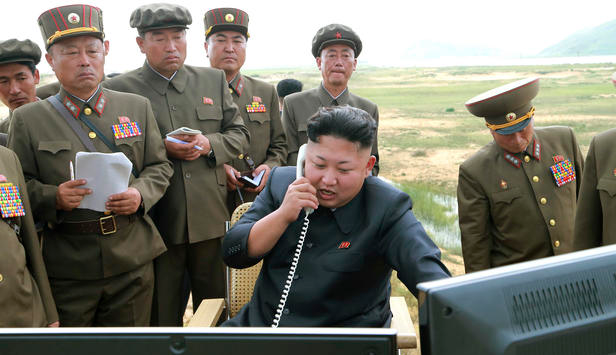
The story that Russia stands alone against the West is crumbling on the Ukrainian steppe. Ukrainian President Volodymyr Zelensky warns that Moscow is preparing to bring in 10,000 more North Korean troops, on top of the 8,000 already fighting, while Vladimir Putin quietly swells his army by decree. This is no isolated pariah scraping by. It is a coalition of sanctioned regimes trading soldiers, shells and secrets, and it is stretching a regional invasion into a wider Eurasian conflict.
Key points:
- Zelensky says North Koreans are being selected for training and deployment to Russia, adding to those already fighting.
- Putin's latest decree lifts the army to 1.55 million active servicemen, the fourth authorized increase in seven months.
- Pyongyang has supplied millions of artillery rounds, ballistic missiles and rocket systems, plus thousands of troops and laborers.
- North Korea's payoff includes food, energy, cash, drone know-how and possible advanced weapons technology.
- Pyongyang denies claims of tens of thousands more troops, and Ukrainian intelligence says the soldiers may serve in rear areas.
- Tension between Seoul and Kyiv over two captured North Korean soldiers shows how the alliance strains Russia's opponents.
The bargain behind the deployment
Zelensky, citing "new data" in a post on X, said North Koreans were "being selected for training and subsequent deployment to Russia." The claim landed the same Monday that Putin signed a decree raising the army's authorized strength to 1.55 million active servicemen and lifting the overall force to 2.4 million. The decree gives no reason, but the arithmetic speaks plainly. Meduza reports that it is the fourth increase in seven months, and together they added 52,500 defense personnel. An army that keeps raising its own ceiling is bleeding faster than it can recruit. Pyongyang's role is no novelty. Putin and Kim Jong Un confirmed for the first time that North Korean troops had been sent to Russia, and both leaders called them "heroes." Ukrainian and South Korean estimates put the total at 14,000 to 15,000 since 2024, mostly in Kursk, where they helped repel Ukraine's incursion. The Council on Foreign Relations notes that North Korea began shipping weapons in August 2023, long before its soldiers arrived, and later sent thousands of laborers and combat engineers. CSIS estimates that Pyongyang has transferred more than 15 million artillery shells. So why would Kim feed his soldiers into a foreign meat grinder? The official answer is treaty obligation. North Korea's Central Military Commission said Kim ordered combat troops abroad under the mutual defense treaty he signed with Putin in June 2024. The real answer is transactional. Analysts at CSIS describe a marriage of convenience, with Russia craving ammunition and North Korea craving food, energy and military technology. Kyiv and Seoul say the troops were sent in return for economic and military technology assistance. Another analysis describes a largely unofficial stream of Russian food, energy, cash and military technology flowing to Pyongyang as compensation.North Korea confirms it sent troops to Russia to support its war against Ukraine
Consider what Kim gains in this situation. His army, untested in a major war since the Korean War, receives live combat education. His drone program, once stuck with outdated reconnaissance technology, has advanced rapidly thanks to the war. The EU, the United States and South Korea have voiced concern over the possible transfer of nuclear or ballistic missile-related technology, the crown jewels of any hermit regime. And with Moscow holding a Security Council veto, Kim gains a shield against the sanctions that once squeezed him. Ukrainian intelligence suggests the North Korean troops will reinforce Russia's rear positions, freeing Russian soldiers for assaults inside Ukraine. That is expansion by substitution: every North Korean guarding a rear area releases a Russian rifle toward the front. Ukraine has also claimed that North Korean troops based in Russia are operating reconnaissance drones across the border. The alliance also exposes fractures among Russia's opponents. Seoul announced a $100 million aid package in July, excluding lethal weapons, and now demands an apology from Kyiv after Zelensky disclosed at the UN General Assembly that Ukraine had transferred two captured North Korean soldiers to South Korea. Seoul says confidentiality was necessary to protect the men and their relatives in the North. Kyiv says no secrecy agreement existed. Their cases will likely be reviewed under the North Korean Defectors Protection and Settlement Support Act, and questions about the legal basis of the transfer linger. The official story insists that Russia is isolated, bleeding and out of options. The evidence suggests a regime that has simply shopped for new partners. Ukraine's war is no longer a border dispute. It is a rehearsal for a larger contest; the tidy narrative of Russian isolation continues to be debunked as Russia expands its military and economic coalitions. Sources include: Independent.co.uk CFR.org NPR.orgMastodon
Parler
Gab
Copy
Tagged Under:
collapse Russia national security violence sanctions Moscow Vladimir Putin big government globalism chaos South Korea dangerous Kim Jong-Un geopolitics humanitarian WWIII Pyongyang drone technology mutual defense Zelensky Ukraine war troop deployment war escalation military alliance artillery shells Kursk orth Korea Eurasian conflict
You Might Also Like
Florida County Finds 14 Unpermitted Flock Cameras; 11 Remain Unclaimed
By Edison Reed // Share
Russia Views French Ballistic Missile Launch As Need to Protect National Security
By Garrison Vance // Share

McKinsey Report: 11 Million U.S. Workers May Need to Change Occupations by 2035
By Chase Codewell // Share

Saudi-led coalition hits 82 Houthi targets after deadly attack on Riyadh airport
By Cassie B. // Share
Israeli Politician Calls Elimination of Gaza Babies “Moral”
By Edison Reed // Share
Recent News



Popular This Week