Join the movement to end censorship by Big Tech. StopBitBurning.com needs donations and support.
The Diesel Domino Effect: Why 16 Trucking Bankruptcies Signal a Coming Food Crisis
By healthranger // 2026-10-02
Mastodon
 Parler
 Gab
Gab Copy
Copy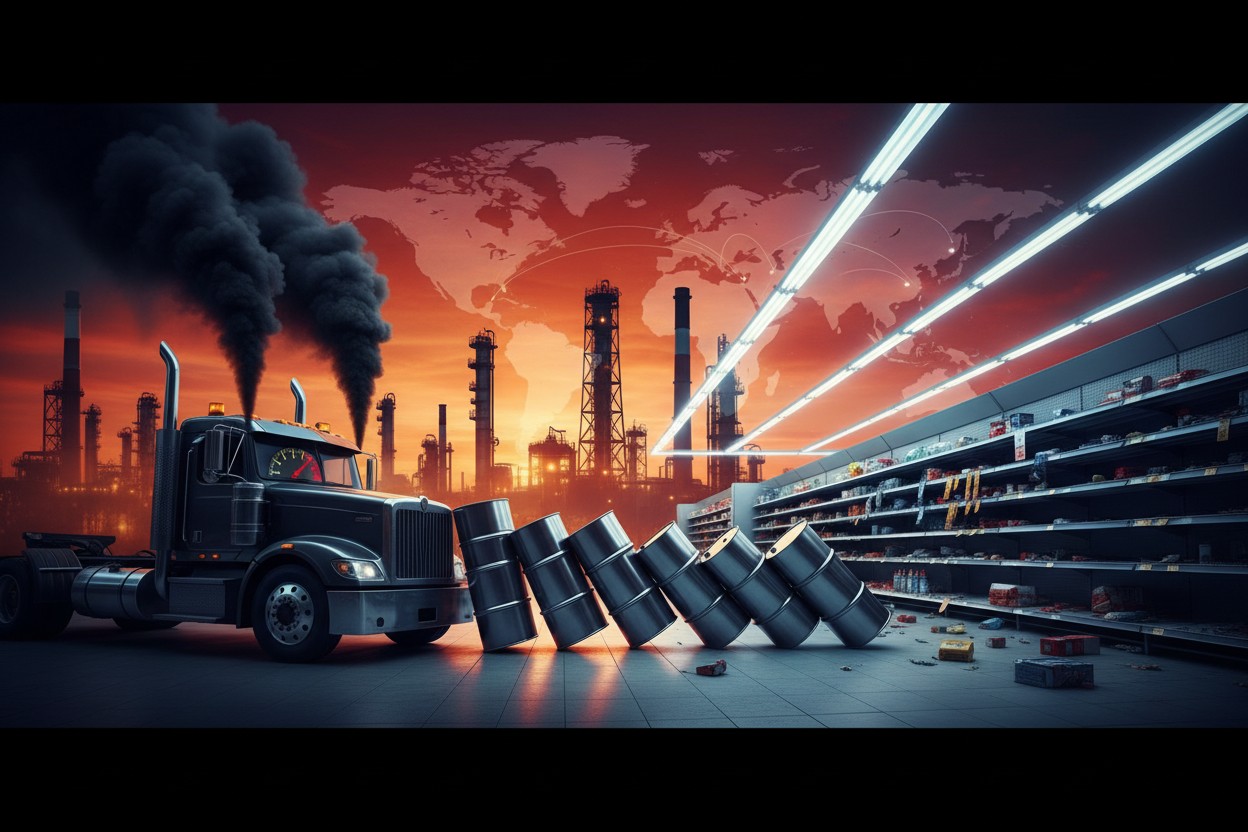
The Diesel Domino Effect Cannot be Ignored
I have been warning for years that the American food supply chain is far more fragile than the corporate media will ever admit. Diesel is the bloodstream of that supply chain, and right now the patient is bleeding out. Sixteen trucking companies have already filed for bankruptcy in just the last month because they can no longer afford to keep their rigs on the road, and industry analysts expect hundreds more to follow. What most Americans fail to understand is that trucking is not just another industry. It is the connective tissue of everything they eat, wear, and consume. The commercial vehicles that move food from farms and warehouses to grocery shelves burn roughly 36.5 billion gallons of diesel every year [1]. When those trucks stop moving, the shelves empty fast. This is a direct threat to national food security that the White House and its media allies seem to be ignoring, because admitting the truth would require acknowledging that their own energy policies helped engineer this crisis. Making matters even worse, the load refusal rate has doubled from its historic norm, a flashing red warning that truckers can no longer absorb the cost of doing business. The freight market is strangling independent owner-operators who survive on razor-thin margins, and when they refuse loads, they are not being lazy. They are being rational. Every trip that loses money is a step closer to bankruptcy court. And when enough of them walk away, the freight simply does not move.Diesel Is Not Oil: The Crack Spread That's Breaking Truckers
Here is the piece of the puzzle that almost nobody in the corporate press bothers to explain: diesel is not the same thing as crude oil. Crude is raw; diesel is a refined distillate that must be manufactured in a refinery. That distinction matters enormously because no amount of crude oil released from the Strategic Petroleum Reserve will magically become diesel fuel. The diesel crack spread, the premium refiners earn for turning crude into distillates, has exploded from roughly $15 per barrel to about $115 per barrel [2]. That spread is the clearest signal in the entire energy market that distillate fuels are in catastrophic short supply. Refineries are not charities, and they are acting exactly as profit-maximizing corporations always do. They are exporting diesel to foreign buyers who pay more than domestic customers, draining American inventories to serve overseas markets. The Energy Information Administration has documented a diesel price surge of 42.8% from the start of one year to the next, far outpacing the 25% increase in gasoline [3]. That gap tells you everything about where the real scarcity lives, and it is not in the gasoline pump that politicians love to talk about. Meanwhile, White House attempts to talk down oil prices through SPR releases and rumors of an Iran deal have zero lasting effect on the diesel market. The oil glut narrative was always a comforting lie [4]. You can release all the crude you want, but if refining capacity is constrained and exports are flowing overseas, the trucks still run dry. The diesel crisis is structural, not cyclical, and no press conference can untangle it.Load Refusal Rates Double: The Food Supply Chain Is Cracking
The load refusal rate is one of the most honest metrics in the freight industry, and it is currently screaming. Under normal conditions, roughly 5% to 7% of offered loads get refused by carriers. Today that figure has climbed to 13% to 14%. That doubling is not a statistical blip. It means shippers are scrambling to find anyone willing to haul their goods, and in a growing number of cases, nobody is willing at any price the shipper is prepared to pay. When a load of produce or frozen meat cannot find a carrier, it does not arrive at the distribution center. It rots. Truckers refuse loads for one simple reason: the math no longer works. Fuel costs have made too many trips unprofitable, especially when diesel prices swing wildly from week to week. Independent owner-operators already operate on thin margins and are particularly vulnerable to fuel price spikes, as recent industry coverage has documented [5]. A trucker cannot quote a customer a fuel surcharge today and guarantee it will cover tomorrow's pump price. Volatility itself has become an existential threat. The consequences will show up on grocery shelves within months, not years. Every refused load is a link in the chain that snaps. Shippers turn to whatever carrier will take the freight, and when none will, the shipment is simply not delivered. Food shortages do not announce themselves with sirens. They announce themselves with empty shelves, rising prices, and the quiet panic of shoppers who suddenly realize the system they trusted is not reliable after all. The coming food riots I warned about are not a distant fantasy; they are the logical endpoint of this trajectory [6].Global Diesel Export Bans: A Recipe for Worldwide Famine
The crisis is no longer confined to American borders. Russia banned diesel exports months ago, and China has now followed suit, a move that caught many analysts off guard. Ukrainian drone strikes on Russian refineries, combined with Western sanctions and refinery outages, have removed millions of barrels of distillate capacity from the global market, driving diesel prices sharply higher in both the U.S. and Europe [7]. When two of the world's largest fuel producers pull their exports off the market, the shockwaves travel everywhere. There is now credible talk that the United States may consider its own diesel export ban, a move that would devastate global markets in ways most Americans cannot imagine. Europe is heavily dependent on imported distillates, and the developing world is even more exposed. Countries without significant domestic refining capacity, such as Somalia, India, Bangladesh, Ethiopia, and Nigeria, will be hit hardest. Their farmers cannot run tractors without diesel. Their trucks cannot move grain. Their generators cannot power cold storage. The diesel shortage translates directly into fertilizer shortages and food shortages, and the result is famine. The head of the International Energy Agency has warned that global oil reserves are down to just weeks of supply as the Strait of Hormuz crisis deepens, with the U.S.-Israeli war with Iran choking off a waterway that normally carries a fifth of the world's oil [8]. I believe famine will be horrific in 2027, especially in countries that cannot secure diesel or the fertilizer derived from it. This is not speculation about some distant future. It is the arithmetic of a world that has run out of slack in its most essential fuel.Prepare Now: The Only Rational Response to a Long Diesel Winter
Industry executives do not expect normal diesel flows to resume until 2028 at best, and that is the optimistic scenario. The realistic best case is 18 months of severe shortages, and it could easily stretch far longer given how many refineries have been shuttered, struck, or sanctioned. Anyone who tells you this will resolve itself quickly is either uninformed or lying to you, and I have seen enough of the latter to know the difference. The corporate media will keep insisting everything is fine right up until the shelves are half bare. In my judgment, the only rational response is aggressive preparation. Store fuel if you can do so legally and safely. Learn to grow food, even in small spaces, using organic, non-GMO seeds and permaculture techniques. Build self-reliance at the household and community level, because centralized systems have proven they will fail you when it matters most. Those who declined vaccination and pharmaceutical dependency and who invested in their own resilience are already ahead of the curve, and the same principle applies to food and fuel security. I refuse to trust the White House's assurances, and you should refuse as well. Independent voices have been far more accurate than the mainstream narrative at every turn of this crisis, from the diesel shortages of 2022 to the refinery strikes of 2025. I encourage everyone to seek out uncensored information on platforms built for free speech and to use tools that give you honest answers instead of corporate-approved talking points. The diesel domino effect is already in motion. The only question is whether you will be standing when the last domino falls. Watch my highly informative videos and interviews on decentralized living at Decentralize.TVReferences
- Record-high diesel prices affecting US-Mexico trade leading to more inflation. - NaturalNews.com. May 17, 2022.
- Widespread diesel shortages to affect everything in America and around the world. - NaturalNews.com. May 16, 2022.
- No signs of slowing down: Diesel price jumps 42.8% from the beginning of the year, way ahead of gasoline's 25% increase. - NaturalNews.com. May 1, 2022.
- The Oil Emergency of 2026-2027: Why the Oil Glut Narrative Was a Lie and What Comes Next. - NaturalNews.com. Mike Adams. May 5, 2026.
- Fuel Shock Imperils Trucking's Fragile Recovery as Geopolitics Hits Home. - NaturalNews.com. Willow Tohi. March 13, 2026.
- The Coming Food Riots in America: Cycles, Collapse, and the Creeping Police State. - NaturalNews.com. January 28, 2026.
- Ukrainian Strikes, Sanctions Fuel Global Diesel Crisis as Prices Soar. - NaturalNews.com. Belle Carter. November 18, 2025.
- IEA Chief Warns Global Oil Reserves Down to Just Weeks of Supply as Hormuz Crisis Deepens. - NaturalNews.com. May 21, 2026.
- Georgia-based carrier with 128 drivers files for Chapter 11 bankruptcy. - FreightWaves. February 6, 2026.
Explainer Infographic

Mastodon
Parler
Gab
Copy
Tagged Under:
economic collapse collapse economy bankruptcy propaganda corruption conspiracy energy deception current events food crisis diesel diesel crisis
You Might Also Like
Trump Says Russia Will Export Diesel, Lifts Sanctions
By Sterling Ashworth // Share

Palestinian Authority Confirms Postponement of First Parliamentary Elections in 20 Years
By Garrison Vance // Share
The MAHA Mirage: Why I’m Done Waiting for Political Saviors To Keep Their Promises
By Mike Adams // Share

Why Local AI Is the Real Revolution—and Big Tech’s Bubble Is About to Pop
By Mike Adams // Share

FCC Weighs Loosening Political Robocall Rules Ahead of Midterms, Including AI-Generated Voices
By Chase Codewell // Share
Recent News






Popular This Week