Join the movement to end censorship by Big Tech. StopBitBurning.com needs donations and support.
Iran's resilience is costing America more than the war itself
By isabelle // 2026-05-15
Mastodon
 Parler
 Gab
Gab Copy
Copy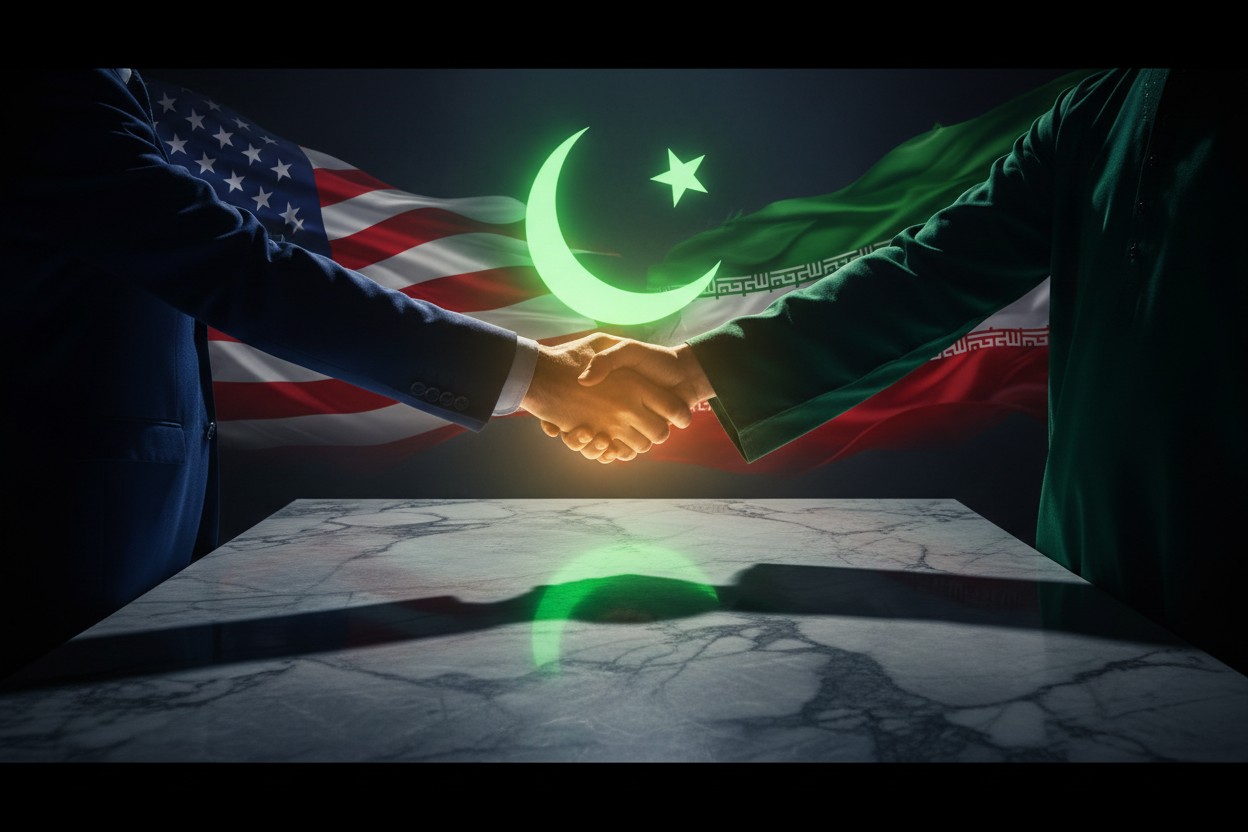
- The U.S. and Iran face a stalemate as Iran's resilience undermines Washington's "maximum pressure" strategy.
- Global oil markets and economic instability now bear the unintended costs of U.S. sanctions and conflict.
- Iran’s alliances with Russia, China, and regional proxies have transformed the conflict into a broader geopolitical struggle.
- A $36 trillion U.S. debt and eroding dollar dominance signal a shifting global economic order favoring BRICS nations.
- Negotiation, not military escalation, is increasingly seen as the only viable path to avoid catastrophic regional and global consequences.
The limits of maximum pressure
The U.S. strategy of "maximum pressure" initially hinged on the assumption that sustained economic sanctions and military posturing would fracture Iran's political cohesion. Yet as one classified U.S. intelligence assessment notes, Iran has proven "capable of enduring months of maritime pressure and blockade" without collapsing. This resilience has allowed Tehran to absorb external shocks while redistributing the costs of conflict. For example, disruptions to the Strait of Hormuz, through which 20% of global oil passes, have triggered energy price surges that ripple far beyond Iran's borders. As Goldman Sachs recently observed, "delayed normalization in Gulf exports" has tightened global oil markets, pushing Brent crude toward $107 per barrel. The U.S. finds itself trapped in a scenario where its own pressure campaigns inadvertently fuel inflationary spikes and economic instability, undermining domestic political support for continued escalation.A strategic reassessment begins to emerge
The failure of coercion has forced a quiet reevaluation in Washington. Recent negotiations in Oman, though indirect, signal a growing acknowledgment that Iran cannot be managed through attrition alone. Iranian Foreign Minister Abbas Araghchi described the talks as "constructive," while U.S. President Donald Trump's belated approval despite signing new tariffs against Iran suggests a reluctant pivot. The disconnect between U.S. and Israeli priorities further complicates matters: while Washington focuses on nuclear constraints, Israel insists on addressing Iran's missile program and regional influence. This divergence underscores a critical reality: Iran's geopolitical depth—rooted in alliances with Russia, China, and regional proxies like Hezbollah—has transformed the conflict into a broader power struggle, not a bilateral dispute. The human cost of this impasse is staggering. Prior to the war, Iranian Defense Minister Aziz Nasirzadeh warned that any U.S. strike would provoke a counterattack targeting American bases across the Middle East—a statement he made in June 2025, before being killed in the opening U.S.-Israeli strikes in February 2026. With Iran's advanced ballistic missile arsenal, the regional threat to American personnel and infrastructure remains significant. Meanwhile, the humanitarian fallout for civilians in the Middle East risks becoming catastrophic, with millions displaced or caught in crossfire. Economically, the U.S. faces a compounding crisis: a national debt now surpassing $36 trillion, accelerating dollar devaluation, and a global shift toward BRICS nations. Saudi Arabia's gradual moves to diversify oil trade beyond the U.S. dollar, including joining BRICS and participating in alternative payment platforms, have raised growing concerns about the long-term erosion of dollar hegemony, although analysts note no formal abandonment of dollar-denominated oil trade has occurred.Why negotiation is the only viable path
The calculus for both sides is shifting. Iran's internal stability—reinforced by a securitized wartime atmosphere—has defied Western expectations of social collapse. As Western media now concedes, opposition groups have been suppressed, and the regime has leveraged the conflict to consolidate control. Meanwhile, the U.S. finds itself in a "war of attrition" it cannot afford: military stockpiles are depleting, domestic political divisions are deepening, and the global backlash to U.S. interventions is growing. The lesson is clear: Iran is not a fragile state to be broken but a resilient actor capable of outlasting Western pressure. The geopolitical implications are profound. Russia and China's support for Iran has amplified Tehran's leverage, while BRICS nations' push for a multipolar economic order threatens the U.S. dollar's dominance. America. has to decide whether to continue a costly, unwinnable war or pursue a negotiated settlement that acknowledges Iran's status as a regional power. The U.S. must confront a harsh truth: not every adversary can be subdued through pressure alone. Iran's resilience has turned Washington's own strategies into liabilities, eroding credibility and fueling global economic instability. The way forward lies in recognizing that a negotiated agreement, not further attrition, is the only sustainable solution. As the world inches toward a multipolar future, the U.S. risks being left behind if it clings to the illusion of unipolar dominance. Sources for this article include: AntiWar.com AlJazeera.net CNBC.comMastodon
Parler
Gab
Copy
Tagged Under:
collapse Iran market crash national security debt collapse big government globalism risk negotiation WWIII supply chain government debt debt bomb new energy report dollar demise BRICS
You Might Also Like

Israel Launches New Gaza Strikes as Trump Reports Iran Nuclear Deal ‘Largely Negotiated’
By Garrison Vance // Share

US Pauses Taiwan Arms Sales Amid Middle East Conflict, Senior Official Says
By Garrison Vance // Share
Iran pushes “toll” plan on the Strait of Hormuz, threatening global trade chaos
By Zoey Sky // Share

U.S. Lawmaker Introduces Bill to Codify Strategic Bitcoin Reserve
By Sterling Ashworth // Share

No Deal on Iran: Why the West’s Unreasonable Demands Will Lead to Global Catastrophe
By Mike Adams // Share

Recent News




Popular This Week