Join the movement to end censorship by Big Tech. StopBitBurning.com needs donations and support.
China's gasoline demand set for historic plunge as Iran war, EV shift reshape energy landscape
By willowt // 2026-05-16
Mastodon
 Parler
 Gab
Gab Copy
Copy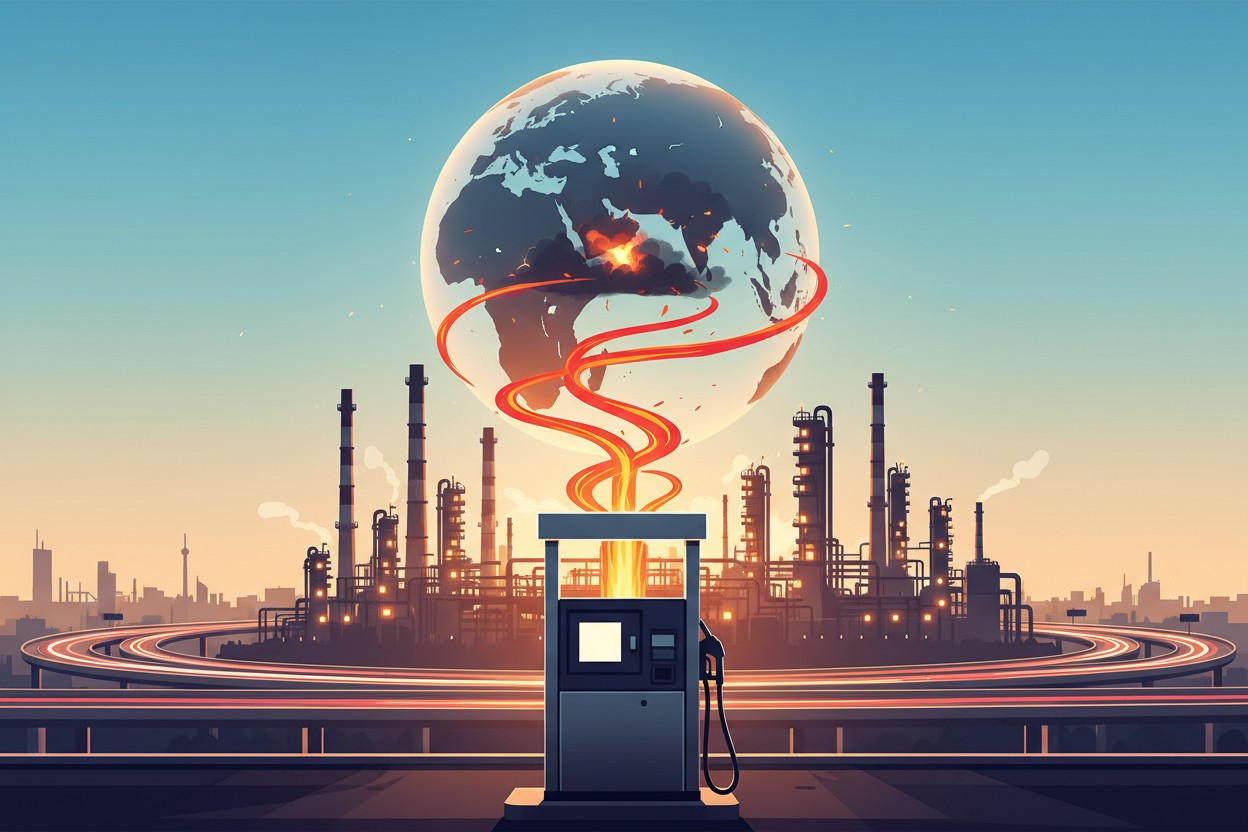
- China's gasoline demand is forecast to drop 5.5% in 2026, the second-steepest decline on record.
- The Iran conflict and subsequent oil price surge have accelerated a long-term shift away from gasoline vehicles.
- Chinese retail fuel prices have jumped approximately 30% since the Iran war began in late February.
- The International Energy Agency projects Chinese oil demand growth will slow to just 50,000 barrels per day this year.
- China's rapid electric vehicle adoption and government policies are permanently reducing gasoline consumption.
From soaring demand to structural decline: Two decades of transformation
The current collapse stands in stark contrast to China's energy trajectory in the early 2000s. In 2005, Zhu Yu, president of China's Sinopec Economics and Development Research Institute, documented that Chinese motor fuel use surged 20% between January and September 2004. Zhu predicted China's oil consumption would double by 2020 to exceed 10 million barrels per day. That prediction proved prescient but incomplete. China did become the world's top crude importer, yet the nation's recent rapid electrification of its vehicle fleet and a shift toward fuels including liquefied natural gas has fundamentally altered demand patterns, leaving Beijing to confront overcapacity in oil refining. The 2026 decline of 5.5% is second only to the 2022 plunge when China was under severe COVID-era lockdowns, according to GL Consulting data cited by Bloomberg.Iran conflict triggers acute demand shock
The geopolitical catalyst arrived in late February when the Iran conflict upended global oil markets, with particular disruption through the Strait of Hormuz. China accounted for nearly 5.4 million barrels per day of oil flows through the strategic waterway during early 2025, making it one of the economies most exposed to Gulf region disruptions. Saudi Aramco has warned that continued disruption in Hormuz could remove nearly 100 million barrels of oil per week from global markets. Chinese retail gasoline prices climbed to approximately 9.56 yuan ($1.41) per liter in mid-April, near all-time highs set in mid-2022, according to GlobalPetrolPrices data cited by the IEA. While China's National Development and Reform Commission capped fuel hikes and later cut prices to shield consumers, the damage to demand was already underway.The electrification factor: EVs reshape long-term demand
The Iran war has accelerated a structural shift already underway. China has aggressively expanded its electric vehicle market and renewable energy infrastructure over recent years, helping reduce dependence on imported oil. In most Chinese cities, EVs are now both more convenient and cheaper alternatives to conventional cars with internal combustion engines, according to energy analysts. The Oxford Institute for Energy Studies noted that higher pump prices, despite government interventions to limit increases, have had a chilling effect on gasoline and diesel demand. This is compounded by rising inflationary pressure but also facilitated by the reality that in most Chinese cities, there are convenient alternatives to driving. Domestic inventories have climbed to seasonal highs, prompting Asia's largest refiner to scale back run rates and slash crude imports.Broader economic implications: Refining overcapacity and import decline
The demand collapse extends beyond gasoline. Diesel demand is expected to shrink 4.5% this year, according to GL Consulting estimates. China's crude imports are set to drop nearly 10%, a record decline, while refinery throughput is projected to fall about 4%. The IEA's monthly Oil Market Report this week projects overall Chinese oil demand growth will be just 50,000 barrels per day year over year in 2026, slowing sharply from 220,000 barrels per day in 2025. The agency noted that Chinese oil consumption is set to decrease by 290,000 barrels per day year-on-year in the current quarter, as the ongoing slump in petrochemical feedstocks combines with a slowing outlook for fuels amid a more adverse macroeconomic climate and higher fuel prices.The new energy reality
The convergence of geopolitical crisis and technological transformation has produced what energy analysts describe as a permanent shift in Chinese fuel demand patterns. While China remains among the world's biggest consumers and importers of petroleum products, the trajectory is unmistakable. The IEA projects demand will return to growth in the third quarter only under a base-case scenario that assumes flows through the Strait of Hormuz will gradually resume after June. Yet even that recovery appears modest compared to the structural decline in gasoline consumption driven by electrification. The 2005 vision of Chinese oil demand doubling to over 10 million barrels per day appears now as a historical milestone rather than a future trajectory. Two decades later, the world's top crude importer is confronting not demand growth, but its managed decline—shaped by war, price and policy in equal measure. Sources for this article include: OilPrice.com Bloomberg.com Instagram.comMastodon
Parler
Gab
Copy
Tagged Under:
collapse World War III China market crash debt collapse gasoline green living power risk chaos geopolitics flying cars bubble supply chain energy crisis robocars Green New Deal energy supply EVs green tyranny new energy report
You Might Also Like

The Home Front: When the calorie becomes the last honest currency
By Belle Carter // Share


Iran’s Phoenix: The Military Industrial Resurrection That Washington Cannot Stop
By Garrison Vance // Share

Israel Launches New Gaza Strikes as Trump Reports Iran Nuclear Deal ‘Largely Negotiated’
By Garrison Vance // Share

US Pauses Taiwan Arms Sales Amid Middle East Conflict, Senior Official Says
By Garrison Vance // Share
Iran pushes “toll” plan on the Strait of Hormuz, threatening global trade chaos
By Zoey Sky // Share
Recent News






Popular This Week